
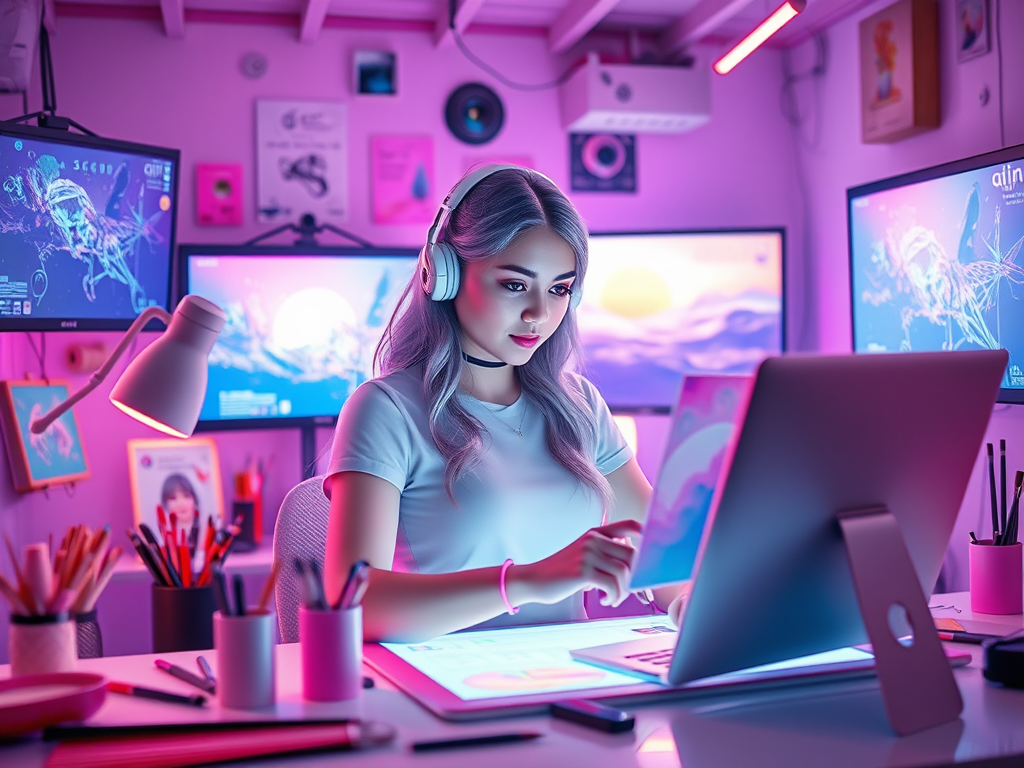
The AI Influencer Starter Pack (With Tools, Budget, and Timeline)
Introduction: The Rise of the AI Influencer
It all started with a late-night YouTube binge. I stumbled across a virtual model endorsing skincare products, her voice calm, her gaze piercing, her audience—millions. She wasn’t real, but the connection felt real. And that’s when I realized: AI influencers are no longer a novelty—they’re a movement.
Having worked in social media and creative strategy for years, I couldn’t help but dive deeper. What tools are needed? How much does it cost? Can anyone create one?
Spoiler alert: yes, and I did. In this blog, I’ll walk you through how I built my first AI influencer, what tools I used, what mistakes I made, and how you can start your own—with a clear budget and timeline. Whether you’re a brand, creator, or curious digital native, this toolkit will get you started.
More personally, I’ve spent years fascinated by the boundaries of digital identity. As someone who’s written campaigns for human influencers, transitioning into AI felt like entering a surreal mirror world—where the same rules applied, yet nothing was the same. My early attempts failed spectacularly. The voice was too robotic. The visuals didn’t connect. But something kept pulling me back. Maybe it was the potential to sculpt identity from code. Maybe it was curiosity. Maybe it was hope.
That experience became more than a tech project—it became a creative practice, a test of my emotional intelligence as much as my technical skills. It showed me that building an AI influencer isn’t about impersonation—it’s about storytelling. And with the right framework, tools, and mindset, anyone can do it.
Part I: Planning the Persona
Before you start generating faces or programming voices, you need to answer: Who is your AI influencer?
I used a simple framework:
- Name & Age: Something approachable and brand-aligned.
- Niche: Fashion? Fitness? Books? Stay focused.
- Tone & Personality: Think of their “online voice.” Playful? Sarcastic? Wise?
- Visual Style: Modern minimalism? Y2K revival? Farmcore aesthetics?
I created Luma, a 24-year-old virtual artist who posts about digital creativity, art tutorials, and AI ethics. Think indie-creative meets tech-savvy futurist.
Tool: Miro (for moodboard + personality sketch)
Time: 1 week
Cost: Free (time investment only)
The biggest challenge at this stage was resisting the urge to copy existing influencers. I had to remind myself that novelty is the point. My first drafts looked too much like existing creators—too “Instagram-ready,” too trendy. That’s when I stepped back and asked: What’s the gap no one is filling?
Luma’s niche—digital creativity paired with AI ethics—wasn’t an accident. It stemmed from conversations I was already having with my community. The goal wasn’t to go viral; it was to go deep. To build something that mattered.
The truth is, the more detailed you are with your persona’s backstory, the more cohesive your content will feel. It’s the hidden lore that gives texture to every post.
Part II: Core Tools, Budget & Timeline
Below are the main tools you’ll need to build your AI influencer, complete with realistic costs and a suggested timeline to keep your project on track.
🛠️ Key Tools Breakdown
| Tool | Main Function | Example Pricing | Notes |
| Midjourney | AI-based image generation for profile pics, branding, posts | Basic ~$10/mo, Standard ~$30/mo, Pro ~$60/mo | Costs tied to GPU usage; unused credits don’t roll over |
| ElevenLabs | Text-to-speech (TTS), voice cloning, audio generation | Free plan available, Paid from $5 to $99/month | Paid plans include better audio, custom voices, API access |
Tip: Start with free plans for experimentation, then upgrade only when you’re ready to produce high-quality public content.
⏱ Sample 2-Week Production Timeline
| Phase | Task | Timeframe | Notes |
| 1. Ideation | Persona planning & moodboard | 2–3 days | Use Miro or Notion |
| 2. Scripting | Writing captions & voiceover scripts | 1–2 days | Focus on tone & story |
| 3. Visual Creation | Use Midjourney for portraits and backgrounds | 2–4 days | Experiment with multiple prompts |
| 4. Audio Generation | Create synthetic voice via ElevenLabs | 1–2 days | Match tone to persona |
| 5. Publishing Plan | Schedule posts, automate rollout | 2–3 days | Use platforms like Buffer |
🎯 Total Time Estimate: 10–14 days for MVP (minimum viable persona)
You can reduce the timeline by overlapping phases, outsourcing editing, or reusing frameworks. If you’re building as a team, assign roles early.
Conclusion: Should You Build an AI Influencer?
Absolutely—if you treat it like a brand, not just a gimmick.
AI influencers are here to stay. Whether they’re fully synthetic or co-created with real people, they’re reshaping how we connect, consume, and even feel.
With the right tools, timeline, and mindset, you can launch your own influencer in 30–45 days. You don’t need a studio. You need a story. And a willingness to evolve.
And remember—your first try doesn’t have to be perfect. It just has to be alive.
Reflecting on my own journey, I’ve had both small wins and sharp setbacks. One week, Luma was featured in a micro-creator round-up, earning unexpected reach. The next, a post flopped—no views, no likes. That emotional rollercoaster is part of the process. And just like any creative endeavor, the more heart you put in, the more resonance you’ll get back.
The most surprising part? I found myself becoming more empathetic. Creating Luma made me think about digital identity in a more nuanced way—not just as an aesthetic, but as a mirror. A way to hold a conversation with culture, and sometimes, with myself.
If you’re standing at the edge, wondering whether to start—jump. Because on the other side, you might find not only an audience, but a new version of you.
Disclaimer:
This document is intended for informational and exploratory purposes only.
It does not represent official advice, legal authority, or verified scientific claims.
Readers are encouraged to interpret the content thoughtfully and responsibly.
No part of this document should be used as a substitute for professional guidance in legal, medical, financial, or technical matters.
Use of this material is at the sole discretion and responsibility of the reader.
Leave a Reply