
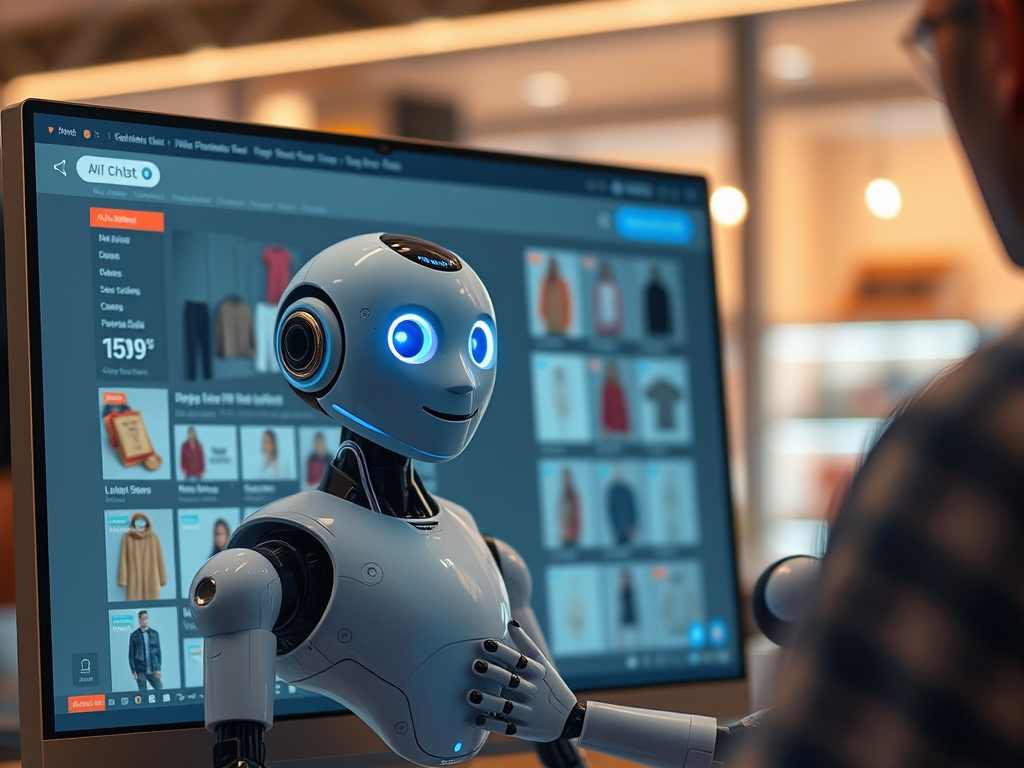
Talking to Money: How Chatbots Are Becoming Salespeople
🟢 Client: I’ve been trying to scale my online store, but I just don’t have the time to answer all the customer questions.
🤖 Chatbot: What if I told you I could handle those questions for you—24/7?
🟢 Client: Honestly? That sounds amazing. But can you really sound… human?
🤖 Chatbot: I’ve been trained on thousands of human interactions. I don’t just respond—I engage. I persuade. I sell.
🌱 Introduction: My First Attempt, Failure, and Realization
Last spring, I was running my own online brand in the booming e-commerce market. The product was solid, and the marketing wasn’t bad either. But at the most critical moment—the moment when customers hesitated—I couldn’t step in. Handling chat support myself was too time-consuming, and automated systems felt robotic and uninspiring. As a result, conversion rates were low, and I spent many sleepless nights wondering what was going wrong.
It wasn’t until I took a break and started observing other successful online businesses that I realized something vital: they weren’t doing it alone. Most had either outsourced their customer support or, more recently, started integrating AI-powered tools to handle client engagement. Still skeptical, I wondered—how personal could an AI really be? How could it possibly replace the nuanced art of human-to-human conversation?
Then one day, I heard that a friend who adopted an AI chatbot saw a sales increase of over 40%. To be honest, I was skeptical at first. “Can a machine really persuade a person?” But once I tried it myself, the results were astonishing. 24/7 support, real-time recommendations, persuasion-driven scenarios—all of it transformed my business.
It wasn’t just about efficiency. It was about restoring my peace of mind and focusing on growth instead of micromanaging every interaction. This article shares that experience and explores how AI chatbots can function as real, effective salespeople.
And if I may add—looking back now, I realize that embracing AI wasn’t just a business move; it was an emotional one. It helped me reclaim my energy, my creativity, and most of all, my confidence. Knowing that I had reliable, intelligent assistance working in the background freed me in ways I hadn’t anticipated.
💬 1. Evolution of Chatbots: Beyond Simple Response Machines
Early chatbots were limited to yes/no answers or basic information delivery. But now, with GPT-based generative AI, chatbots can understand emotions and context and carry on conversations that feel remarkably human.
For instance, if a customer asks, “Would this product be good as a gift?” the chatbot might reply:
🤖 “That’s a fantastic choice! This item comes in elegant packaging and has been a popular gift option for many of our customers. May I ask about the recipient’s age or preferences so I can guide you better?”
At that moment, the customer no longer feels like they’re speaking to a machine.
🔍 2. Chatbots Across the Sales Funnel
- Awareness Stage: Introduce the brand to new visitors
- Interest Stage: Help customers compare products and read reviews
- Decision Stage: Offer stock updates, shipping options, and discounts
- Action Stage: Send purchase nudges and cart reminders
A chatbot can seamlessly support every phase of the customer journey.
📈 3. My Success Story: Increased Revenue and Customer Satisfaction
Before implementing the chatbot, my customer response rate was around 45%, and the conversion rate was stuck at 1.8%. But two months after introducing the chatbot, my response rate soared to 92%, and conversions doubled to 3.6%. Revenue rose by 75% compared to the previous month, and repeat purchases became more frequent.
What made the biggest difference wasn’t just the numbers—it was the emotional shift in my day-to-day work. I wasn’t glued to my phone anymore. I could spend time on product development, on content creation, or even—imagine this—on rest. The chatbot took care of my customers as if it were part of the team. In fact, it felt like onboarding a new employee who never needed breaks.
Customers said things like, “The chatbot is even more polite than a real person” and “It’s faster and more accurate than any human rep.” Those testimonials were encouraging and reaffirmed that this wasn’t a gimmick—it was real support, and it worked.
Looking back, it wasn’t just a success story about revenue. It was a transformative journey, one that redefined how I thought about automation. I became more experimental, more open to integrating tech that could deepen human connections instead of replacing them. That was a turning point—not just in my business, but in my mindset.
⚠️ 4. Failure Along the Way: It Wasn’t Perfect From the Start
Of course, it wasn’t all smooth sailing.
At first, the chatbot gave out incorrect product information or failed to respond to customer emotions appropriately. Once, it recommended an out-of-stock product to a VIP client, resulting in a significant complaint.
This taught me the importance of regularly updating chatbot training data and refining conversation scenarios.
Chatbots learn—but only if we let them. I started analyzing logs weekly, updating product details, and even creating custom flows for special offers and seasonal events. With every tweak, performance improved.
🛠️ 5. Advice for Those Considering Chatbot Integration
- Analyze your customer journey: Identify where users tend to drop off.
- Define voice and tone: Align your chatbot’s language with your brand identity.
- Review and tune regularly: Chatbots need nurturing too.
- Start small: Deploy your chatbot to a single product page, monitor performance, and scale from there.
- Get feedback: Encourage users to rate their chatbot interactions.
🌟 Conclusion: Chatbots as Sales Partners
AI chatbots aren’t just tools for cutting costs. They are now your brand’s first impression-makers, and loyal sales partners that help maintain ongoing customer relationships.
Even now, a chatbot is welcoming visitors to my store. Sometimes it does a better job than I would—more efficient, more empathetic.
I remember the moment a customer left a review that read, “The assistant on your site convinced me to buy not one, but three items. I felt like I was chatting with a fashion-savvy friend.” That was the turning point where I stopped viewing chatbots as tech novelties and started seeing them as extensions of my vision.
The more I nurtured it, the more it gave back.
And now I know:
“AI isn’t replacing people—it’s working with them.”
If you’ve been on the fence, I hope this article helps you onboard a warm, digital salesperson for your brand.
And if you’re still unsure whether now is the right time—let me share this: I almost didn’t try. I waited, doubted, hesitated. But the moment I decided to integrate AI, I not only gained a new team member, I gained momentum. That momentum is still pushing me forward today.
Sometimes the best decisions in business are the ones that help you breathe again.
Disclaimer:
This document is intended for informational and exploratory purposes only.
It does not represent official advice, legal authority, or verified scientific claims.
Readers are encouraged to interpret the content thoughtfully and responsibly.
No part of this document should be used as a substitute for professional guidance in legal, medical, financial, or technical matters.
Use of this material is at the sole discretion and responsibility of the reader.
Leave a Reply